
Worktop Edges, Finishes & Details
Finishing details that bring your idea to life
The material sets the tone, but it’s the finishing details that make a worktop feel considered. The profile of an edge, the line where stone meets wall, the way a surface turns at the end of an island: these are the touches you notice every day, often without realising why a kitchen simply feels right.
Each choice brings its own balance of look and practicality. A crisp pencil edge reads as clean and contemporary, while a softer bullnose or ogee adds a more classic feel. An upstand protects the wall behind your worktop, and a full-height splashback turns that same wall into a feature. Below, we explain the options, what each one offers, and where it works best, so you can choose with confidence. Our team is always happy to advise, whether you’re planning a single bathroom vanity or a full kitchen with your designer.
Phone: O1483 268333
Email: info@sabrestone.co.uk
Edge Profiles
An edge profile is the shape cut into the exposed edge of your worktop, and it does more than you might expect. It’s the part of the surface your hands brush past, the line that catches the light, and the detail that quietly signals the style of the room. A sharp, minimal edge can make a kitchen feel architectural and modern; a softly curved or sculpted one brings warmth and a sense of tradition.
Your choice of profile is also practical. Rounded edges are kinder to hips and little heads in a busy family kitchen, while finer, crisper profiles suit sleek handleless designs and slimmer materials. Not every profile suits every stone or thickness, so the right edge depends on your material as well as your taste.
Working in our own Surrey workshop, our masons shape a wide range of profiles, from clean contemporary lines to more decorative classic forms, and can advise on what will work best with your chosen surface. Explore a short selection of options below, or visit our showroom to see and feel more in person.
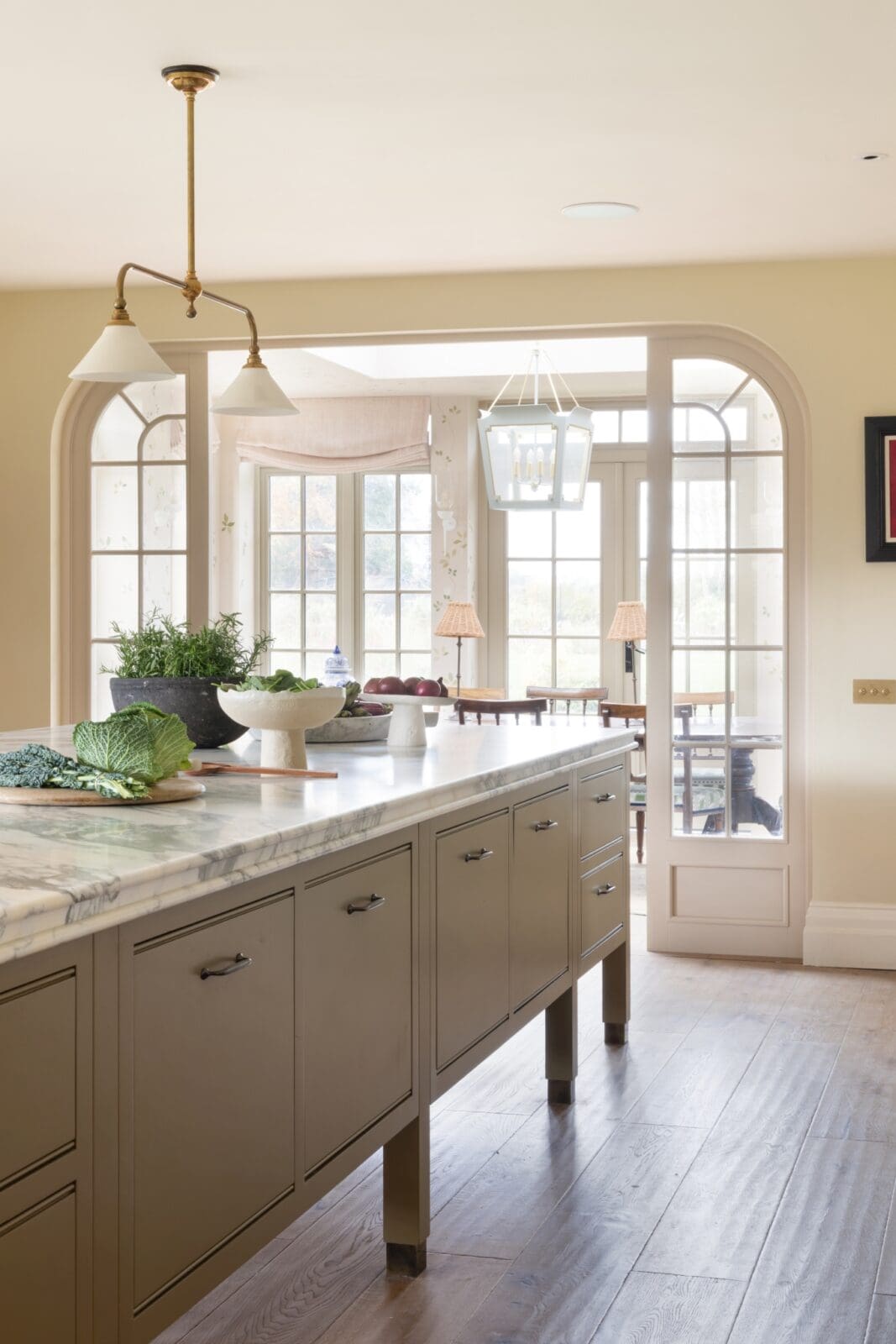
Bullnose
Fully rounded top and bottom for a soft, generous finish. Comfortable to the touch and free of sharp corners, it's a natural fit for family homes.
Ogee
An elegant S-shaped curve that has graced period interiors for centuries. Best suited to thicker stone, it brings a sense of craftsmanship to traditional and country-style kitchens.
Pencil
A clean, square edge with a gently softened corner. Understated and contemporary, it suits almost any material, including slimmer porcelain, and is our most popular choice for modern kitchens.
Sharknose
A square or gently rounded top edge with a sharply angled undercut beneath, making the worktop appear thinner and almost weightless. A striking choice for minimalist and architectural designs.
Cove
A gentle concave curve along the top edge, adding subtle shadow and definition. Refined without being ornate, it sits beautifully between classic and contemporary.
Ogee & Half Bullnose
A truly decorative profile, pairing the flowing ogee curve with a rounded lower edge. A true statement detail for grand traditional kitchens and bathrooms where stone takes centre stage.
Mitred Edges
Mitring is one of the most skilled techniques in stone fabrication. Two pieces of stone are cut at a precise 45-degree angle and joined to form a crisp corner, with the veining flowing from one face to the next as though carved from a single block. It allows a slimmer slab to appear thicker and more substantial, and lets stone turn corners and drop to the floor. Every mitre is cut on precision machinery in our Surrey workshop and finished by hand by our masons.
Beyond waterfall ends and boxed islands, mitring can create floating shelves, deep-edged vanity tops, window sills, shower niches, fireplace surrounds and more. If you have an idea in mind, we’re happy to talk through what’s possible.
Waterfall Ends
The worktop turns at a 45-degree mitre and continues down to the floor, with the veining carefully matched so the stone flows uninterrupted from top to side.
Boxed-up Mitred Islands
Every exposed face of the island is wrapped in stone and joined with precise mitres, creating a solid, monolithic centrepiece that looks carved from a single block.
Upstands & Splashbacks
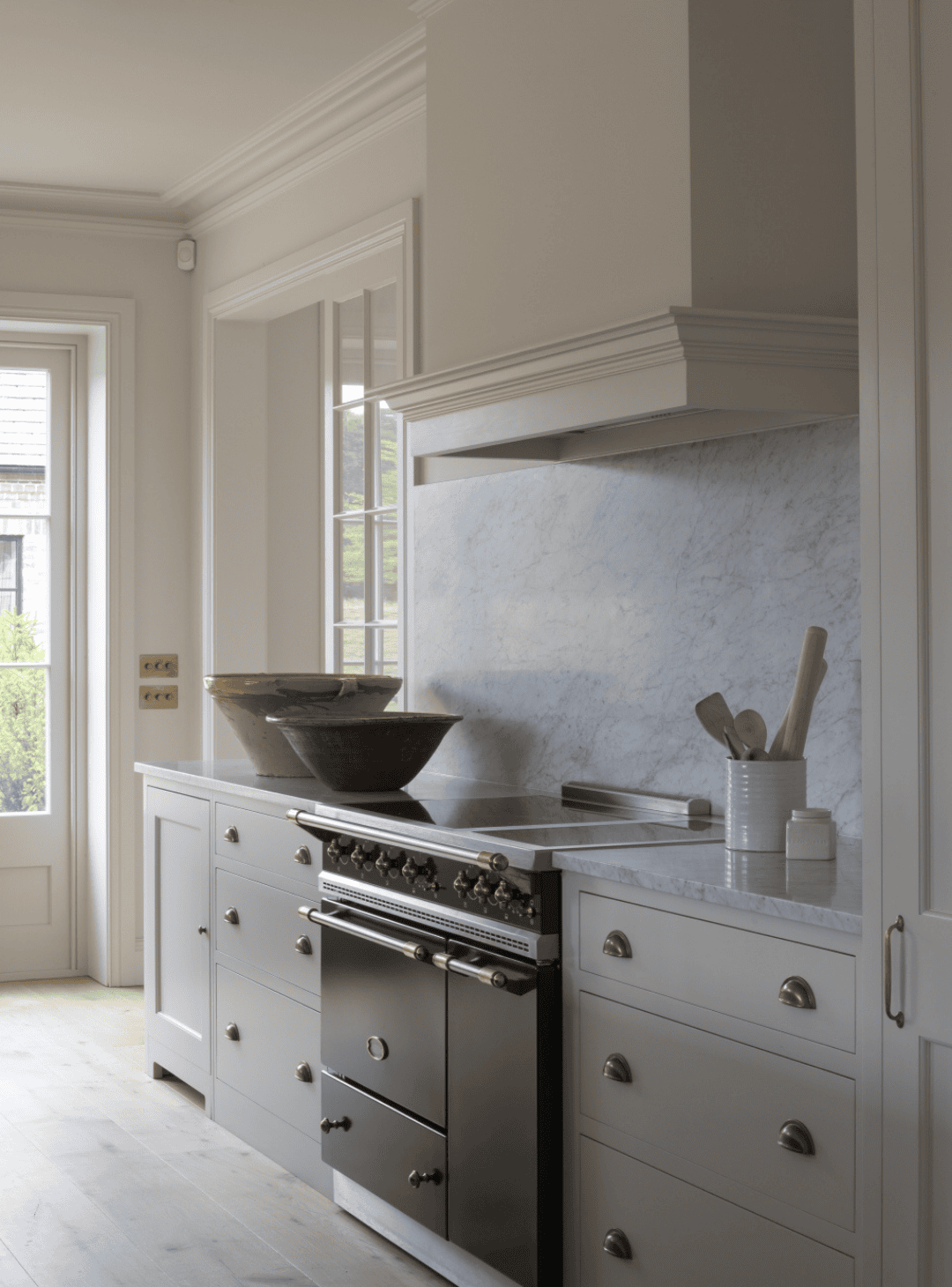
The wall behind your worktop works hard. Splashes from the sink, steam and spatter from the hob and the everyday mess of cooking all take their toll, and the joint where worktop meets wall is especially vulnerable to water creeping in. An upstand, a low strip of stone typically around 100mm high, seals that line neatly and protects the wall behind. A splashback goes further, covering the wall behind the hob or sink, or even rising to full height. Unlike tiles, stone has no grout lines to stain or discolour, so a simple wipe keeps it looking fresh.
Matching your upstands and splashbacks to your worktop creates a calm, continuous look, with the pattern carrying from surface to wall. A full-height splashback can become the focal point of the whole kitchen, and details such as a slim stone ledge for oils and spices bring both beauty and practicality.
Lighting can lift the design further still. Discreet LED strips can be set into a recessed shelf or ledge, or positioned beneath wall units to wash light down the stone and bring out its texture and veining. Socket cut-outs can be precisely made so everything sits cleanly in place. We’re happy to work alongside your designer and electrician to plan these details from the outset.
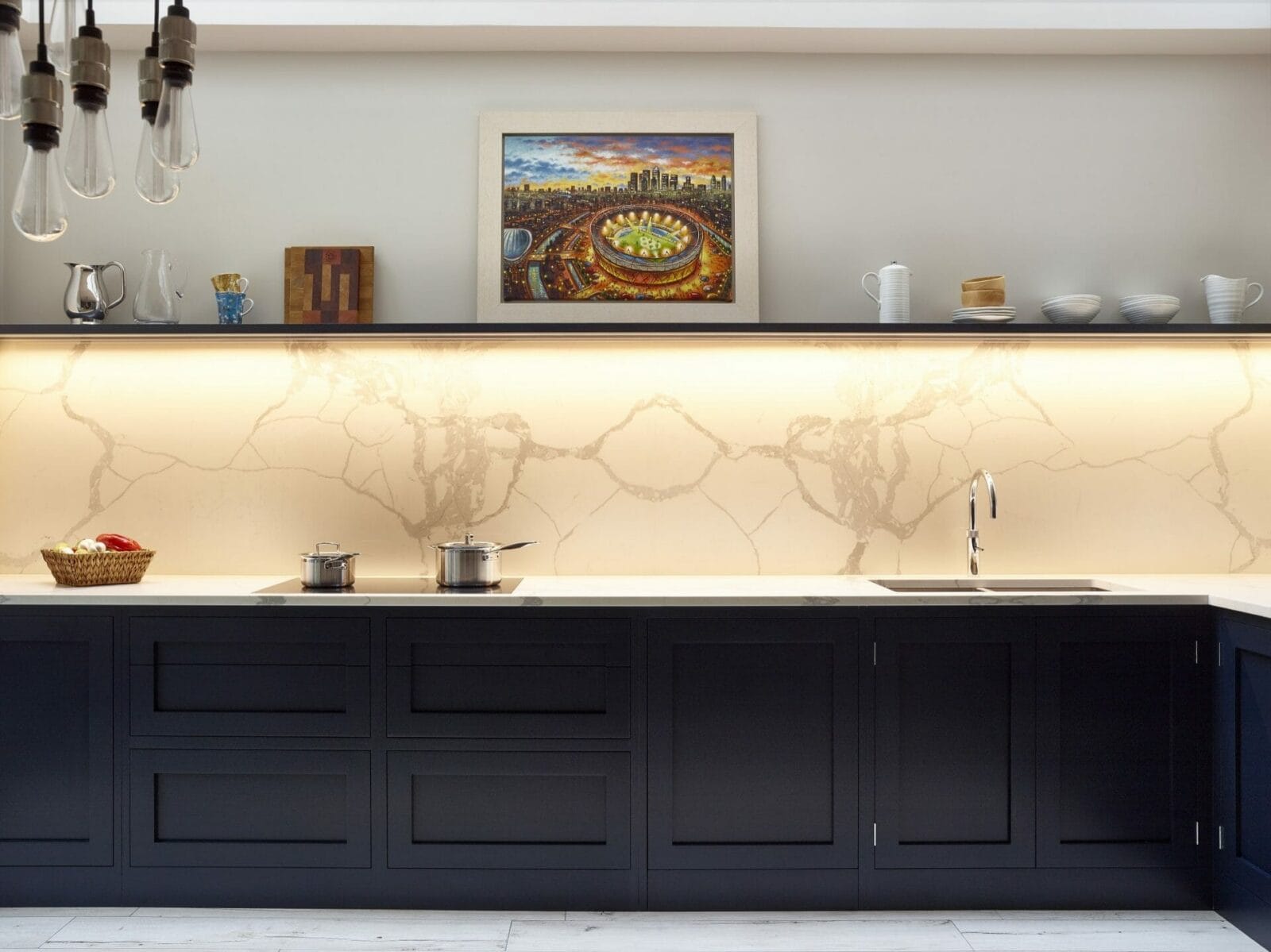
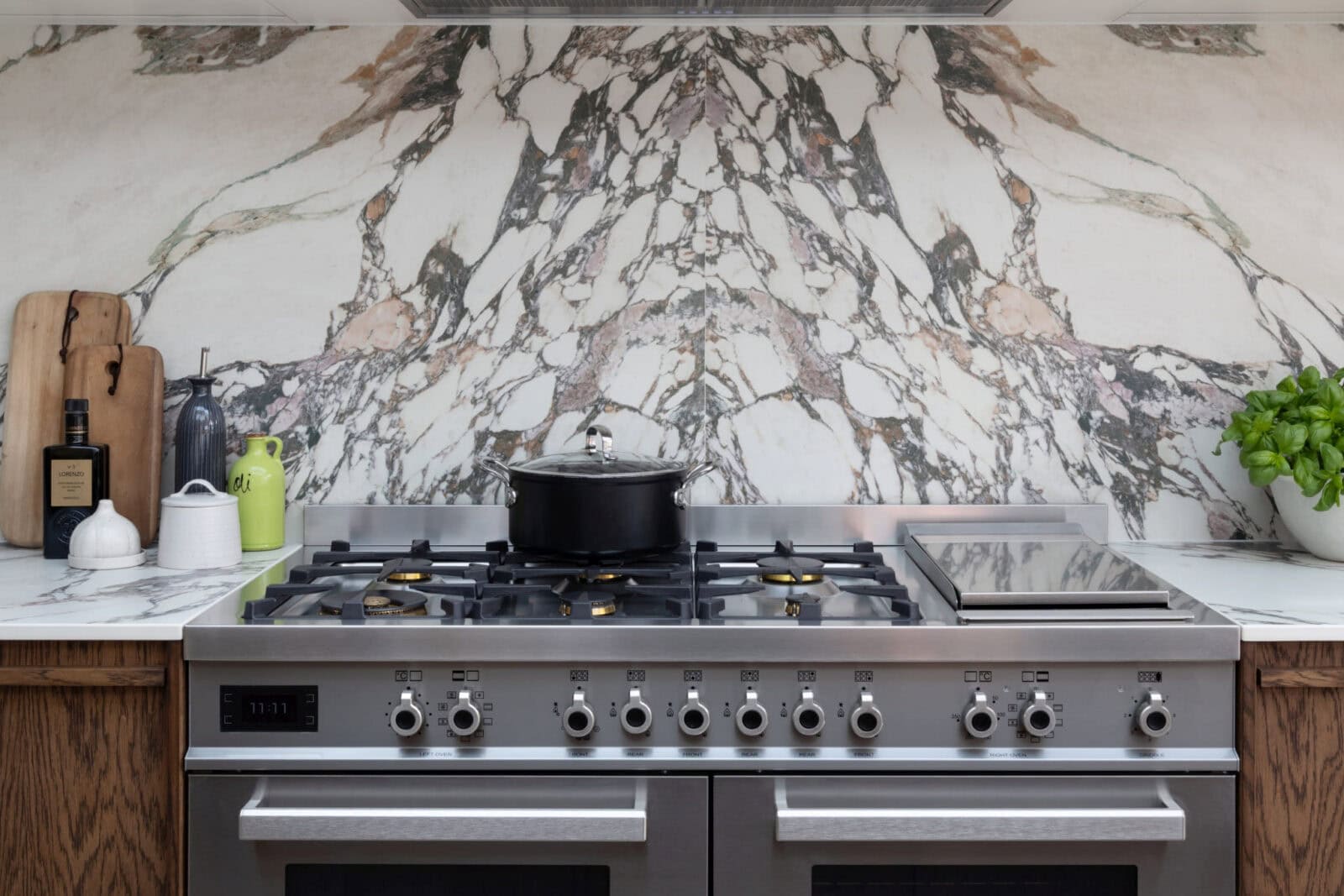
Bookmatching is the art of placing two consecutive slabs side by side so their veining mirrors one another, like the open pages of a book. The result is a striking, symmetrical pattern that feels almost sculptural, perfect for full-height splashbacks, island ends and feature walls. It works most naturally with marble and other natural stones, though some quartz and porcelain ranges are now produced specifically in bookmatched pairs. Careful slab selection and layout are essential, and we can guide you through which materials offer this option.
Draining Grooves
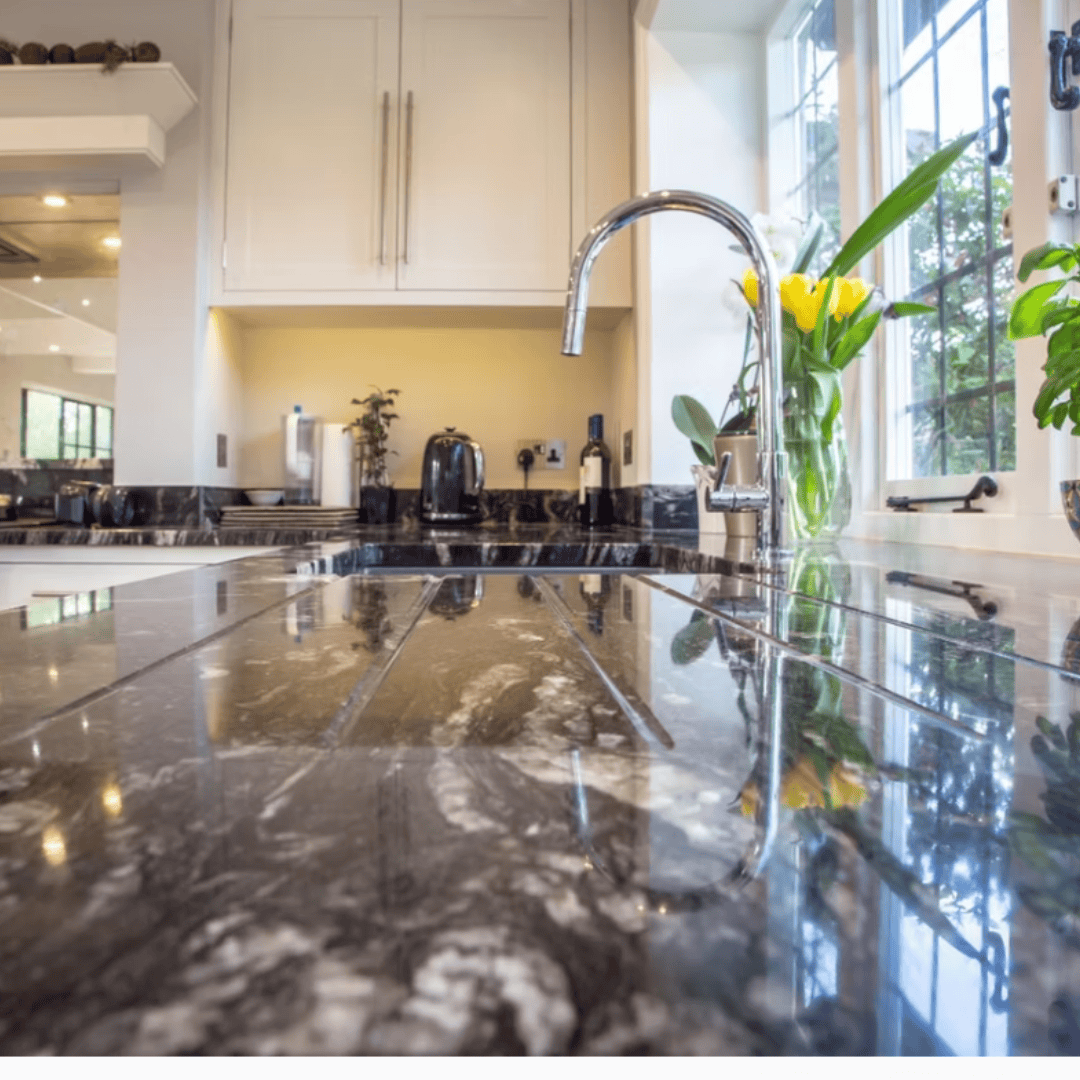
Drainage grooves are shallow channels cut into the worktop beside an undermount sink, set at a gentle angle so water runs back into the bowl. They give you a dedicated spot to drain dishes and glasses, helping keep drips contained and the rest of the surface dry. For a more defined look, the area can also be recessed slightly below the worktop with grooves set into it.
They are entirely optional, and many homeowners prefer an uninterrupted surface. Grooves add a distinctly practical feel to the kitchen, need a little more attention to keep free of limescale, and aren’t suitable for every material. Some porcelain designs, for example, have their pattern only on the surface, so cutting into them would reveal the plain body beneath. If you love a clean, minimal look, a stylish drying rack or mat can do the same job.
Our team can advise whether grooves will work with your chosen stone and help you weigh up the look against everyday convenience.
Thank you,
We've received your request to visit on ().
A member of our team will be in touch shortly to confirm a time.
You'll find us at Home Farm, Baynards Park Estate, Cranleigh, Surrey GU6 8EQ.
Need us sooner? Call 01483 268 333.